Sensitive data cleanup
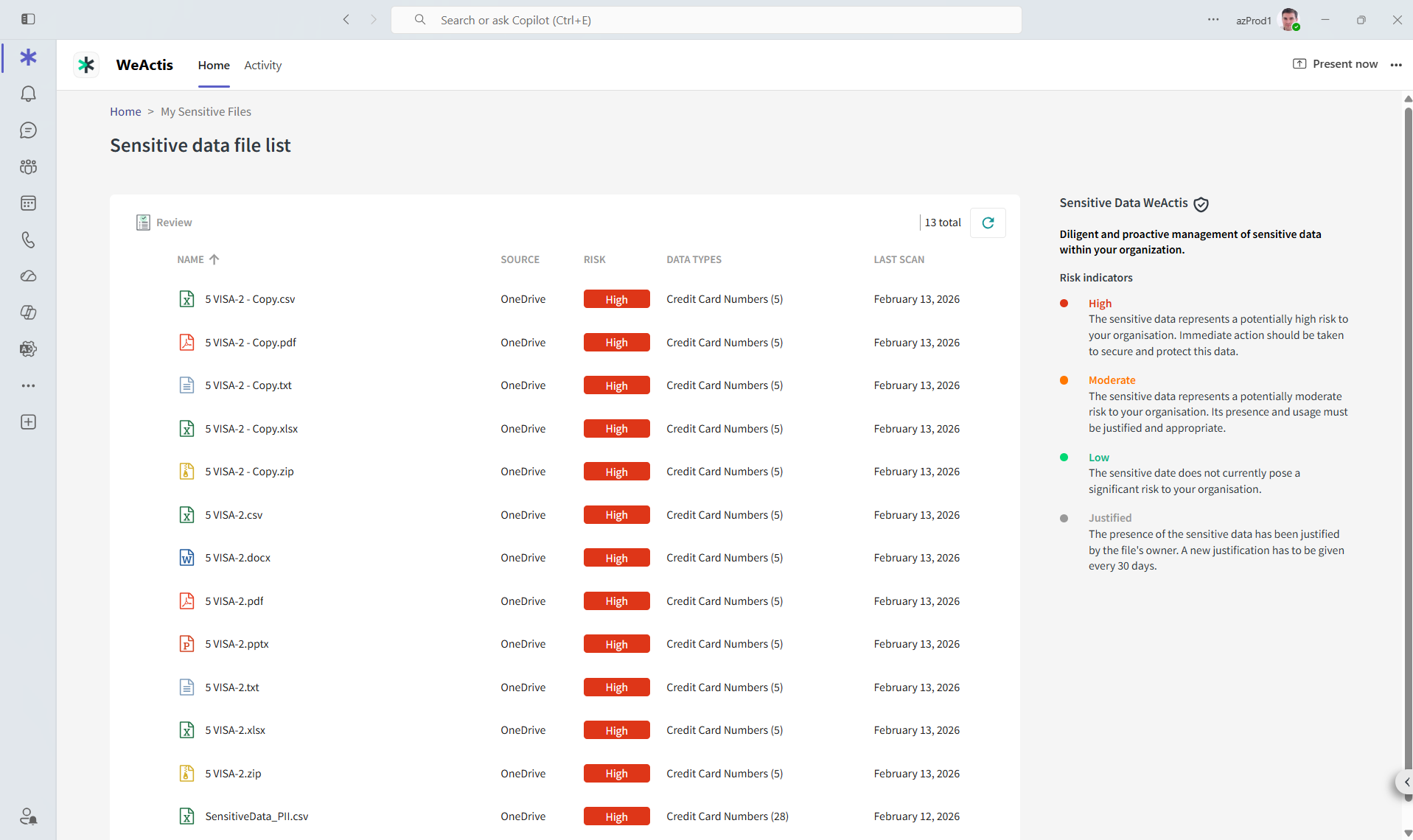
Purview and Qohash identify the risk. WeActis closes the loop by giving end-users a guided workflow to delete the file, justify keeping it, or escalate to IT for review.
DSPM and DLP platforms like Purview are good at detecting sensitive information inside unstructured data. At enterprise scale, they surface far more alerts than any team can review, many of them benign, and the resulting alert fatigue means flagged files just pile up, or detection rules get relaxed. Deciding whether a document should be deleted, kept with a documented reason, or dismissed as a false positive needs business context only the file owner has. That is exactly what turns into a permanent admin backlog everywhere else.
of organizations have sensitive files exposed to all employees via Microsoft 365 Copilot
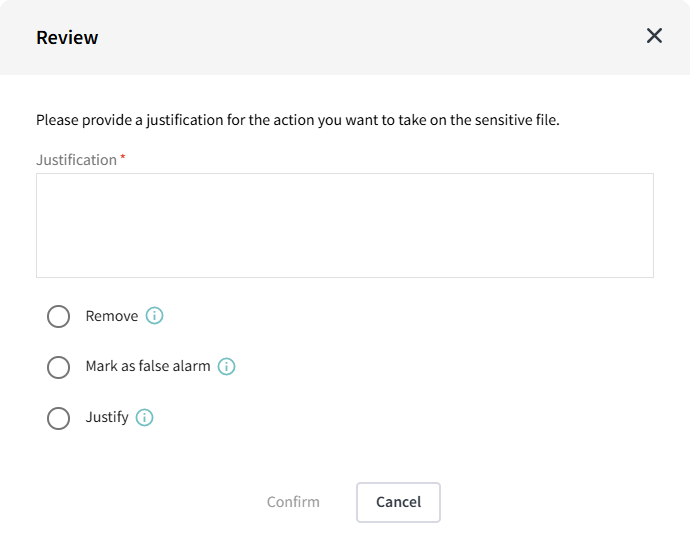
Varonis, 2025WeActis integrates with the detection engine you already run, aggregates the detection results and notifies the end-user inside Microsoft Teams. From there, the owner removes the file, flags it as a false alarm for WeActis administrators to review, or justifies why it needs to stay, with the file remaining accessible while that justification is pending.
Every detection becomes a decision

Great solution for file share security management on M365
VP, ITFinance
Decentralized by design, unlike detection-only tools
DSPM and DLP platforms like Purview detect the files that contain sensitive content, but centralize the resulting decision within IT and compliance. WeActis routes that decision to the person who actually knows the purpose of the content of the file instead, while every action (deleting, justifying, or flagging for review) stays fully available for auditing by the IT and data protection teams.

Questions we hear a lot
Does WeActis classify our data?
No. WeActis integrates with the detection engine you already run (Microsoft Purview, Qohash, or another DSPM) and receives the classification signal. WeActis never inspects file content itself.
What can a file owner do with a flagged file in WeActis?
They have three options: remove the file permanently, justify why it needs to stay (making the justification auditable), or flag it as a false alarm for WeActis administrators to review.
Does the file stay accessible while a WeActis review is pending?
Yes. When an owner submits a justification, the file remains accessible while that justification is under review. WeActis records the pending state in the audit trail so administrators always know what is outstanding.
Is every WeActis decision auditable?
Yes. Every action — removal, justification, or false-alarm flag — is fully logged in WeActis with the identity of the person who acted, the timestamp, and the reason provided. The decision authority stays with the person who knows the file; the audit trail stays with WeActis.
Which DSPM or detection tools does WeActis integrate with for sensitive data cleanup?
WeActis can be connected with any tool that can emit a detection signal and acts as the remediation layer, routing each finding to the right owner inside Microsoft Teams.
How is WeActis different from Microsoft Purview Priority Cleanup?
Purview Priority Cleanup is an admin-initiated, permanent deletion workflow, useful for emergency removal of known sensitive content. WeActis is owner-driven: it routes each detection to the employee who has the business context, so the right decision is made by the right person, not guessed by IT. Both have their place and can run simultaneously.
What happens if a file owner ignores a WeActis sensitive data alert?
Remove this question
See everything WeActis can do
See sensitive data cleanup for yourself.
See how easy it is for a data owner to take action inside Microsoft Teams, no new platform to learn.